Procedural interactive fiction, 2025
Taurus and Andromeda: postmortem
One month after release, I took an honest look at what the game tried to do, how it was received and why so few players reached an ending.
At a glance
- Format
- Interactive fiction
- Structure
- Procedural labyrinth
- Platform
- Browser
- Released
- December 2025
01 · Before the game
An idea that followed me for ten years
The project is much older than its present form. One early prototype was a small Doom-like experiment: whenever I changed direction, the labyrinth behind me changed. Turning back no longer revealed the space I had just crossed.
The goal was already the same: to build a place governed by memory, perception and repetition rather than stable geography. Taurus and Andromeda became the text-based narrative evolution of that prototype.
The most important reference is Borges’s The House of Asterion. I was not interested in adapting its plot, but in the labyrinth seen from within, a voice capable of deceiving itself, and the possibility that the most comforting choice might also be the most destructive.
02 · The intention
The labyrinth is not the real puzzle
Rooms are generated while the game is played, but exploring all of them serves no purpose. Repetition is the central mechanic. The red thread is both guidance and symbol: it represents attachment, memory and the comfort of familiar pain.
I wanted to create a situation in which:
- the most obvious choice felt correct;
- the healthier choice felt wrong;
- letting go felt like failure.
The player’s task is not to solve the labyrinth, but to recognize a recurring pattern and decide whether to break it.
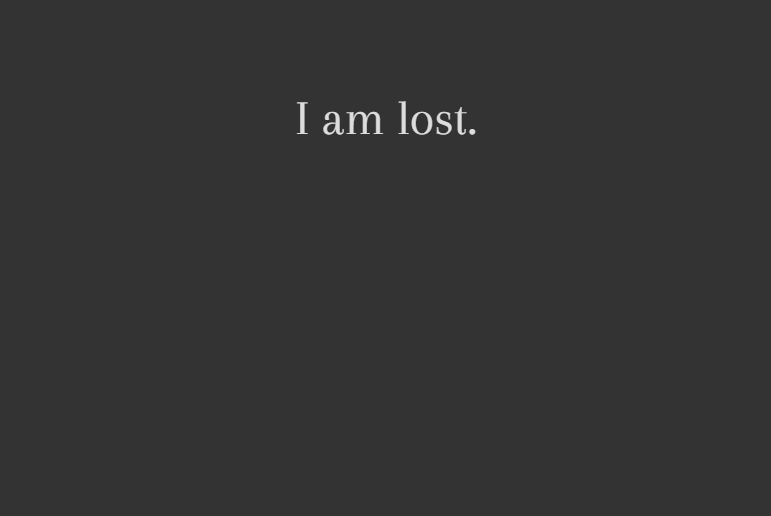
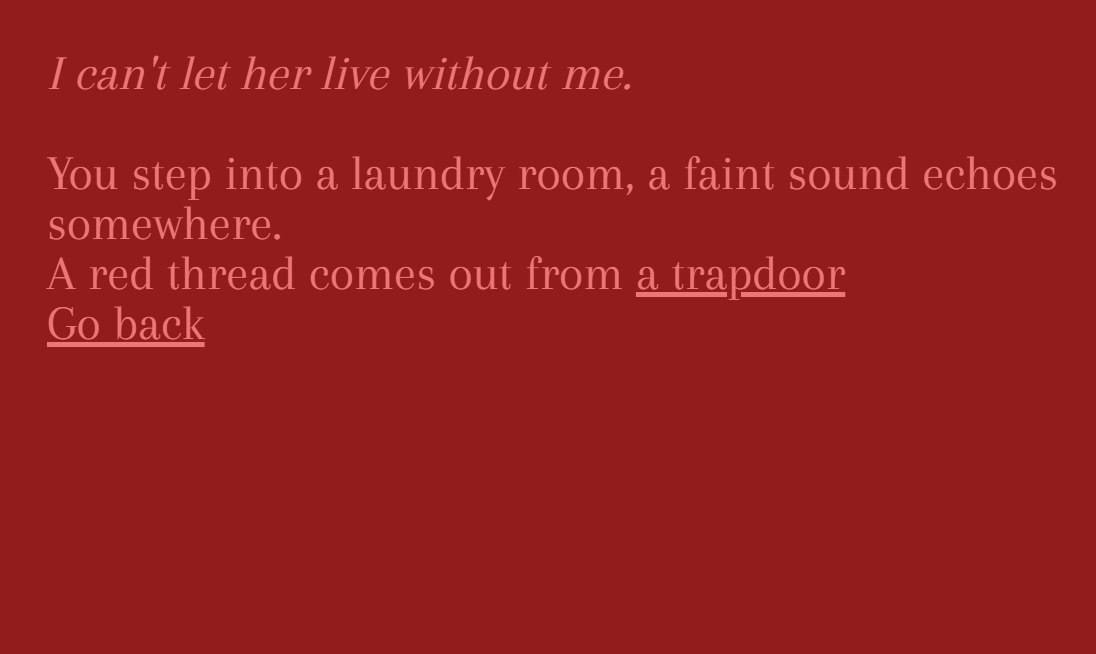
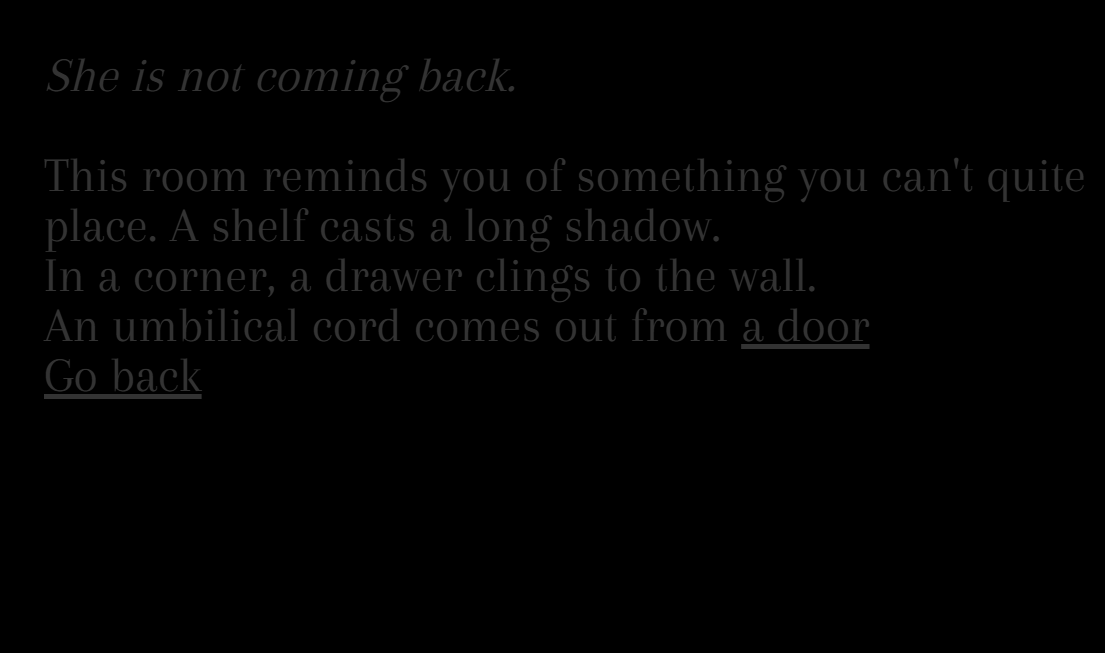
Screenshots published in the original itch.io postmortem.
03 · The numbers
A reception that was hard to ignore
After the first month, the figures looked like this:
- about 200
- plays started
- 20
- players reached an ending
- 5
- players reached the positive ending
- 71st of 74
- in the 2025 IF Short Games Showcase, with a 2.268 average
These were not encouraging results. The most useful number, however, was not the ranking but the roughly ten percent of players who completed the game. It forced me to distinguish what I had designed from what people could actually read in that design.
04 · What did not work
Feeling lost is not the same as not knowing how to play
Narrative ambiguity was intentional. I did not provide enough signals, however, to show that disorientation was part of the meaning rather than evidence of an error or a lack of direction.
Some players assumed the game had no goal. Others interpreted the red thread as the only meaningful path. Many did not realize that turning around and rejecting that guide was an important action.
What I imagined as emotional tension often became mechanical opacity. This is the clearest lesson of the project: a work can ask a player to feel lost, but it must still make the role it assigns them understandable.
05 · How it actually works
The two paths
The game measures a change in behavior, not the ability to explore every room. The following explanation reveals both endings.
Show spoilers
The obsession path
Following the red thread every time it appears reinforces attachment and denial. The game advances toward a tragic ending and the background becomes increasingly red, as though the emotional loop were tightening around the player. Most players who completed the game reached this ending.
The letting-go path
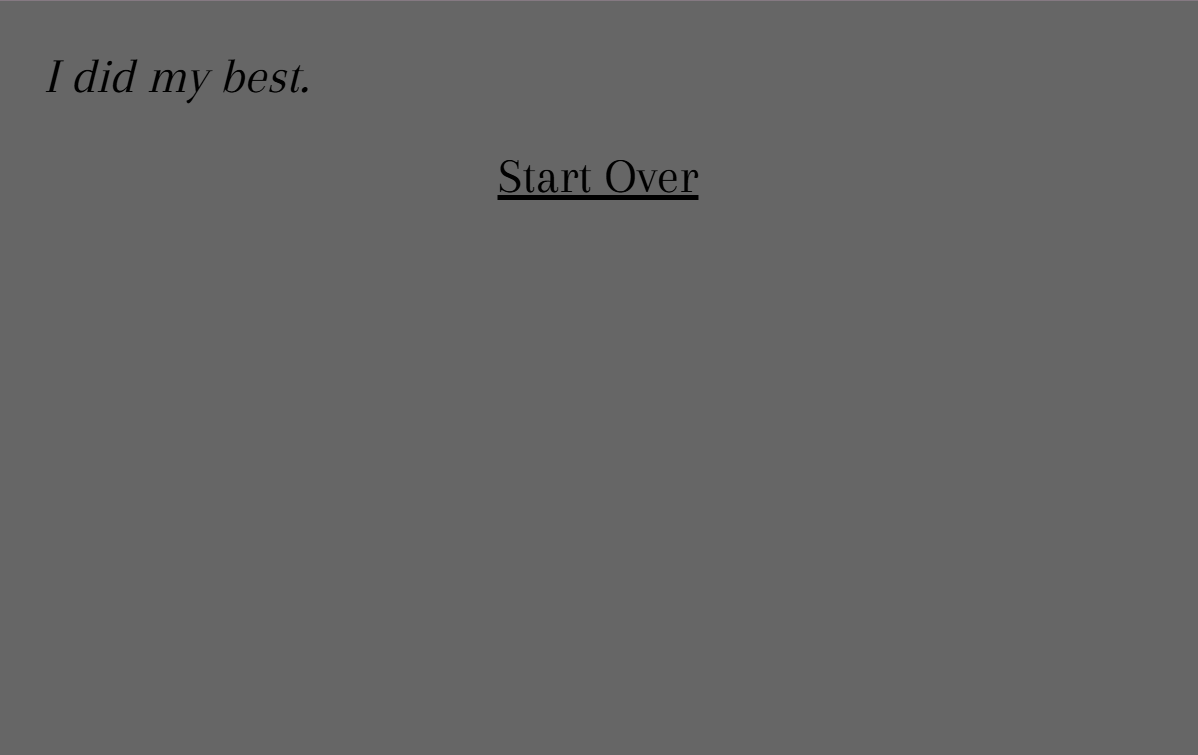
To reach the positive ending, the player must follow the thread at least once, then turn back and deliberately choose unmarked paths. Continuing to resist the familiar route eventually reveals an umbilical cord. Following it means accepting that the relationship has ended and breaking the cycle.
The background first grows darker, then gradually moves toward white. That visual transition follows the emotional one: confusion, loss and finally acceptance.
06 · The context
An experimental game inside a competition
Finishing near the bottom of a ranking is unpleasant, but in hindsight it was not entirely surprising. Showcase players try many games in a short time. Clarity, immediacy and visible reward inevitably carry weight.
Taurus and Andromeda instead asked for patience, emotional interpretation and a willingness to make choices that felt wrong. That context helps explain the distance between intention and reception, but it does not excuse the design. If so many people could not understand the participation I was asking for, that difficulty also belongs to the game.
07 · What stayed with me
Ambiguity is a fragile balance
I do not see Taurus and Andromeda as a failure. I see it as a lesson in how easily emotional design can be mistaken for a lack of clarity. It made me more attentive to the small signals people need to understand not only a story, but their place inside it.
I am grateful to everyone who tried the game, whether they finished it or not. Every attempt helped me see the distance between what a work tries to say and what a person can hear. That is the space from which I want the next project to begin.
Public sources
This page adapts the original itch.io postmortem. Its text, figures and images come exclusively from the project’s public pages.
- Original postmortem on itch.io — intentions, results, analysis and screenshots.
- Public itch.io game page — description, format and release information.
- Playable version on mastorna.it.
Sources reviewed on July 29, 2026.