An Atrax Games project, 2013–2015
Sym: an indie game postmortem
More than ten years after release, I look back at Sym: what I wanted to express, what worked and what I would do differently today.
At a glance
- Developer
- Atrax Games
- Publisher
- Mastertronic
- Released
- May 7, 2015
- Format
- Puzzle platformer, PC and Mac
Why this postmortem
Looking back without rewriting Sym’s history
Sym was my first major commercial project. It was born when making an independent game meant learning almost everything while I was already doing it: design, programming, communication, working with a publisher and releasing on Steam.
Memory tends to make every past decision feel inevitable. It was not. Some ideas found a strong form; others remained clearer to us than to the people playing. A useful postmortem has to hold both truths at once.
01 · The origin
It began with an image
I did not start from a clinical definition of social anxiety. The first seed was a drawing of a black, one-eyed figure dissolving into white space. Looking at it, I imagined different parts of the same person struggling for control. Engadget also described that origin.
At the time I was thinking about the shyness and difficulty speaking to others that I had experienced as a teenager. I had not received a diagnosis, and I did not want to make a therapeutic tool. I wanted to give playable form to the conflict between the desire to step outside and the desire to hide, hoping that someone might recognize themselves and feel less alone. I discussed this in an interview with GamesBeat.
02 · The design idea
Putting the theme inside the rules
Josh exists through two alter egos. Caleb lives in the white world and tries to face his fears; Ammiel retreats into darkness and seeks distance from other people. One command switches between them, changing the character, gravity, and what counts as solid or empty space.
This is still the part of Sym I consider most successful. The theme is not entrusted only to words, but to the repeated gesture of crossing a boundary. Neither world is sufficient by itself. Progress requires using even the space that appears hostile, accepting that both refuge and reality contain dangers and possibilities.
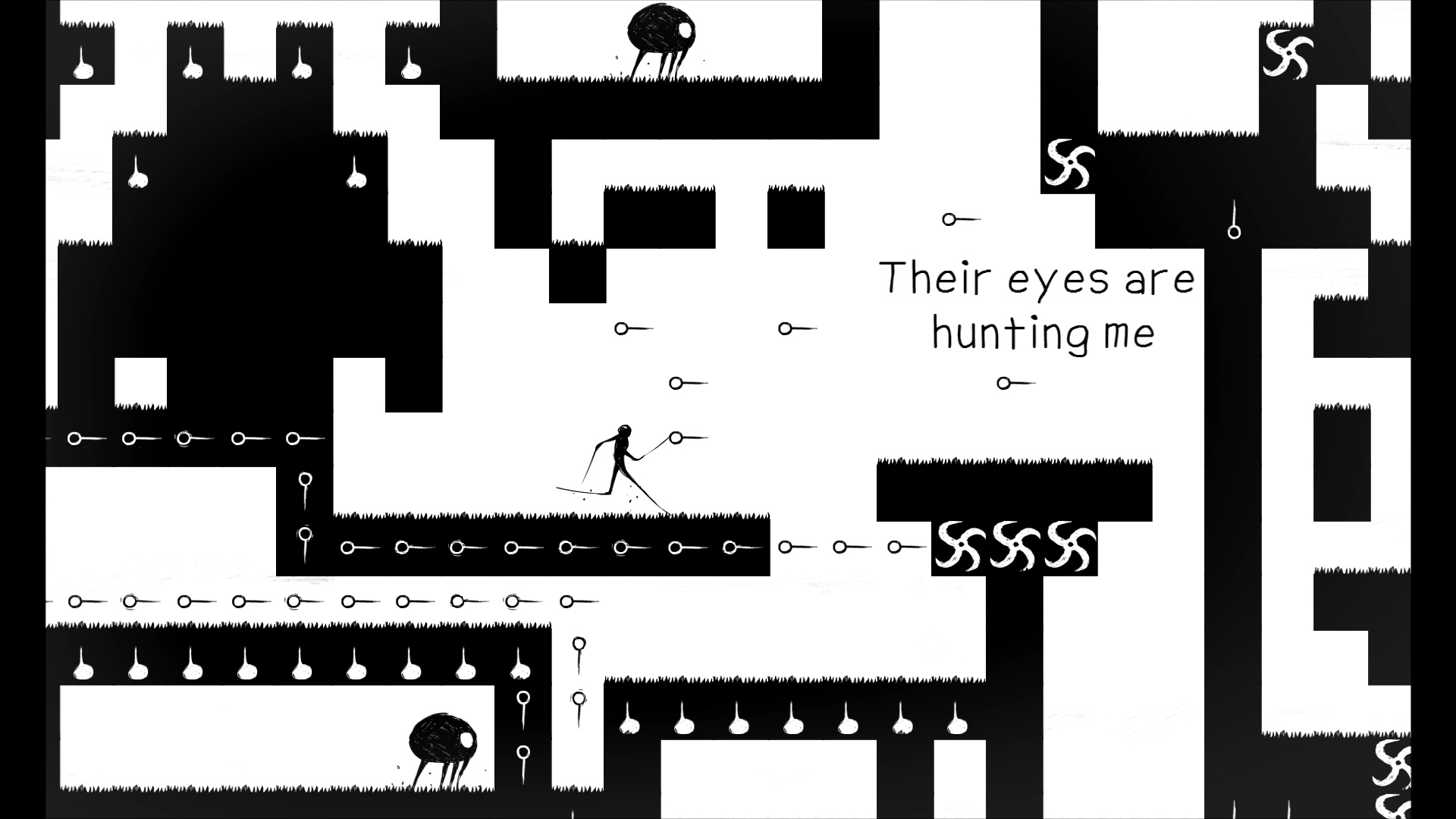
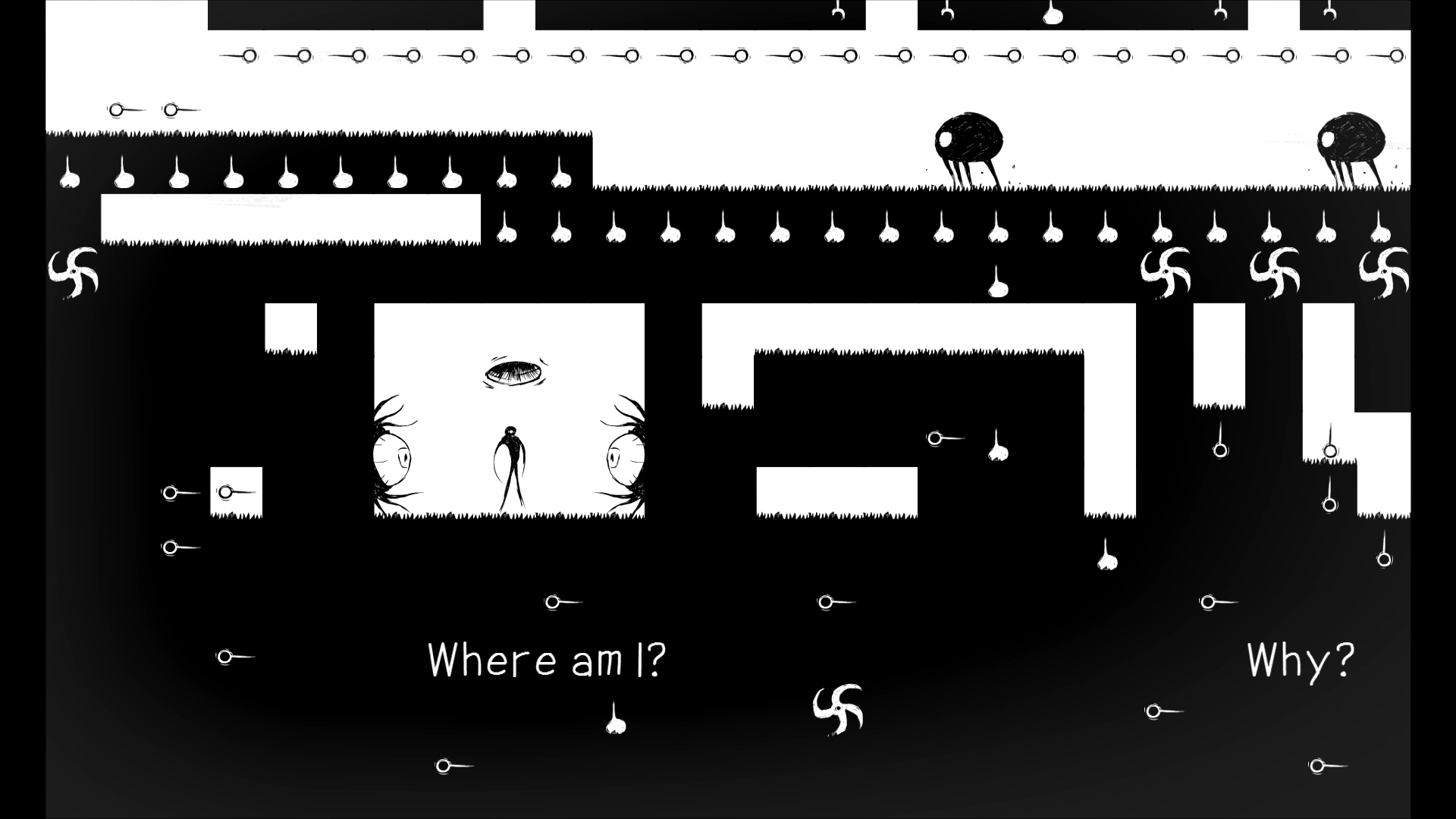
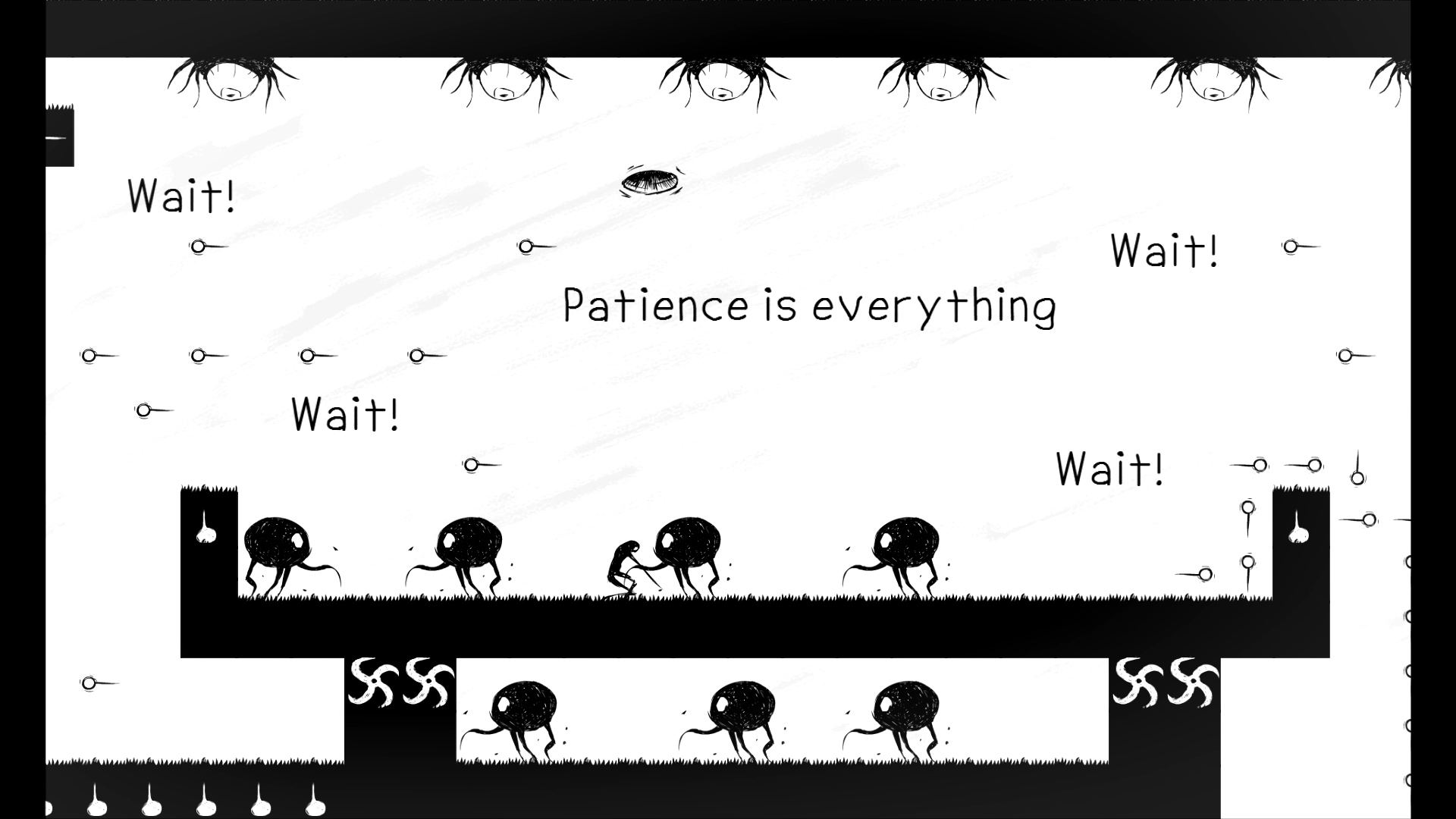
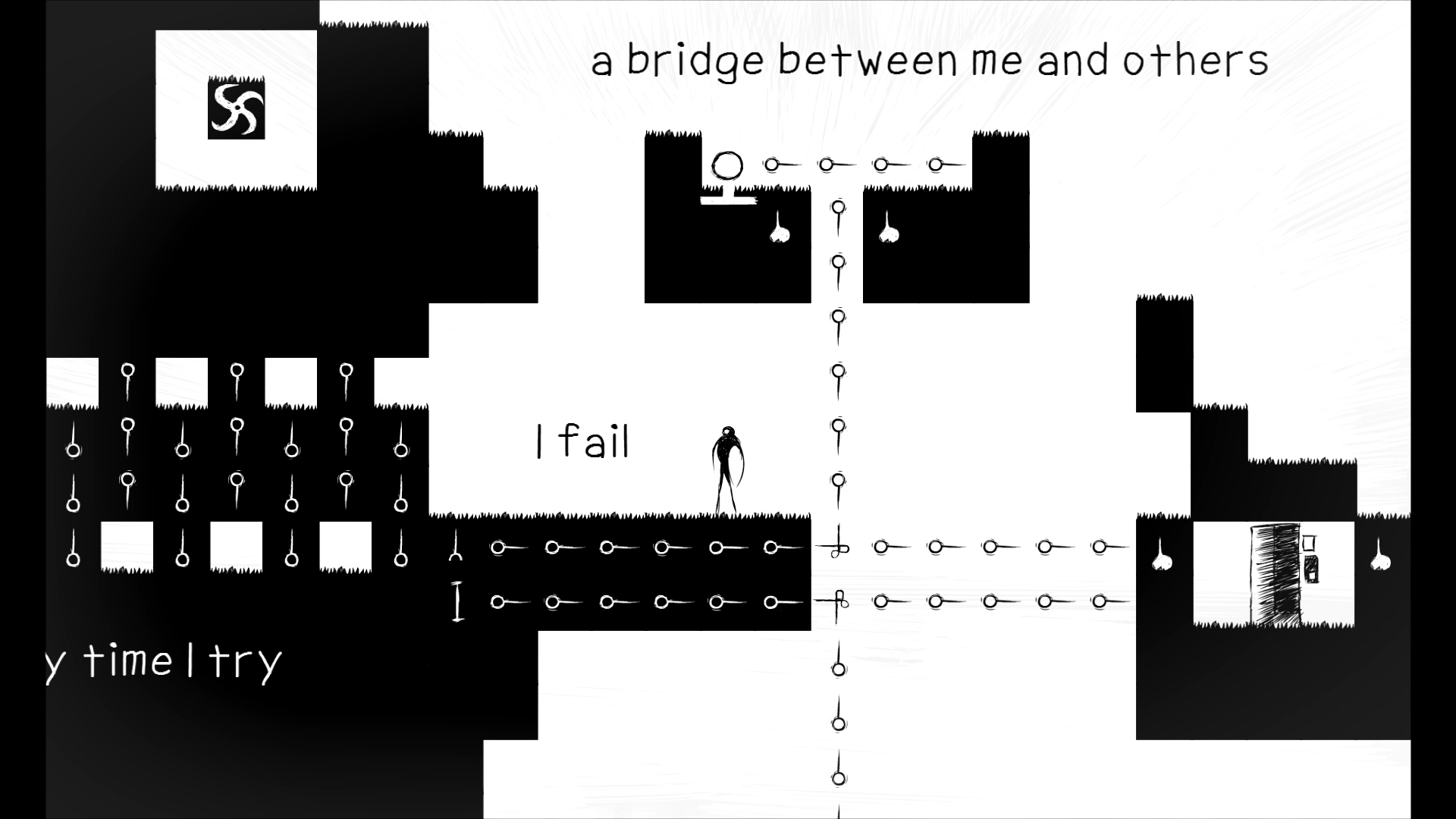
Official screenshots from Sym’s Steam page.
03 · From prototype to game
Turning an idea into a product
By 2013 we were publicly presenting Sym as a symmetrical black-and-white experience. The plan included five chapters, roughly forty levels, two endings and an editor that could connect player creations. The old IndieDB page preserves that early ambition.
Reaching release meant building more than levels: tutorials, menus, save data, localization, achievements and sharing tools. The final Steam version contained 44 levels, eight languages and an editor. Finishing and shipping it remains one of the achievements of which I am most proud.
Sound followed the same idea. Switching to Ammiel made the music compressed and distant, as though it came from beneath the surface. It was a simple detail, but it made the two spaces perceptible before the player had to think about them. The Sound Architect reviewed this aspect.
The public story in brief
-
The prototype
We publish an early browser version. The two worlds, characters and editor concept are already present.
-
Greenlight and demo
After the Steam Greenlight community vote, we announce the partnership with Mastertronic and release a free demo. The contemporary announcement.
-
Release
Sym launches on Steam for Windows and Mac. After years of work, the game finally belongs to its players too.
-
The publisher’s crisis
A few months later, Mastertronic enters administration. That public event changes the context around the game. Contractual and financial consequences belong to private documents and are not reconstructed here. The report from MCV/Develop.
-
Another life
Sym appears in learning material for FACT Liverpool’s States of Play: Roleplay Reality. Seeing the game used to invite others to turn personal experience into design became a more meaningful epilogue than I had imagined. FACT’s learning resource.
04 · What worked
A recognizable identity
Sym communicated an idea in a single image: black and white, two figures, two directions of gravity, and words written directly into the world. That consistency helped it stand out and let the game address a personal subject without separating it from its puzzles.
Committing to completion also worked. An editor and a shared world were large goals for a small team, but they made the player part of the argument: not just a recipient of our experience, but the author of new spaces and connections.
05 · What did not work
When the metaphor becomes too explicit
We wanted the levels to communicate without explanations, but often added text and symbols because we feared the message would be missed. In places, the result was the opposite: too many signals competed with one another and made meaning less clear.
Difficulty also worked against the theme. Controls and collisions were not always precise enough, turning some passages into mechanical frustration. Some critics valued the atmosphere and intention; others found the message too literal and the platforming under-polished. Its Metacritic score of 61 captures that mixed reception. Destructoid, GameSpot and Metacritic show both readings.
Today I would reduce the scope and spend more time on movement, testing with people outside the team and subtraction. I would trust the rules more and the explanatory sentences less.
06 · What stayed with me
Finishing a game does not mean controlling its whole story
Sym taught me that an independent game is both a work and a product. You can care for its code, image and message, but its path will also depend on platforms, agreements, timing and external conditions. That is not a reason to give up; it is a reason to understand that part of the work.
I still see flaws I would approach differently today. I also still recognize the courage of the idea and the work required to give it a complete form. A useful postmortem has to be able to say both.
Public sources and editorial criteria
This page uses only publicly accessible material. Private correspondence, internal documents, financial figures, contractual details and claims that cannot be checked against open sources have been excluded.
- Engadget, A video game for the socially anxious — the concept’s origin and intentions.
- GamesBeat, Escape (or confront) your fears — metaphor and early demo impressions.
- Sym on IndieDB — the public state of the project in 2013.
- Official Steam page — screenshots, release date and features.
- Saving Content — Greenlight, demo and publisher partnership.
- The Sound Architect — music and sound variation.
- MCV/Develop — Mastertronic entering administration.
- FACT, States of Play Learning Resource — Sym’s use in an educational program.
- Destructoid, GameSpot and Metacritic — critical reception.
Sources reviewed on July 29, 2026.